
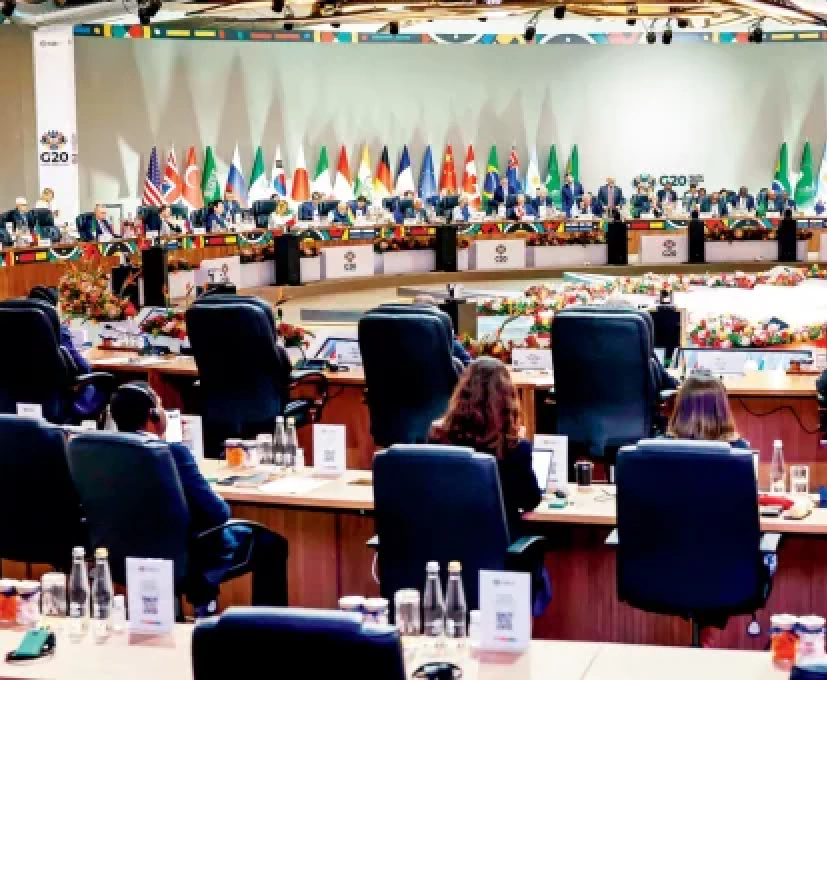
The Group of 20 summit in South Africa ended with another diplomatic spat involving the United States after the host country refused to hand over the rotating presidency of the bloc to what it described as a junior U.S. official.
The U.S. boycotted the two-day meeting of leaders from rich and emerging economies in Johannesburg over the Trump administration’s claims that South Africa is violently persecuting its Afrikaner white minority.
The U.S. is due to take over as G20 president for 2026 — and says it will host its summit at President Donald Trump’s golf club in Doral, Florida. But South Africa insisted that a traditional handover ceremony at the end of this summit likely won’t happen because the U.S. only wanted to send a diplomatic official from its embassy, calling it an insult to South African President Cyril Ramaphosa.
“The United States is a member of the G20 and if they want to be represented, they can still send anyone at the right level,” South African Foreign Minister Ronald Lamola said. “It is the leaders’ summit. The right level is the head of state, a special envoy appointed by the president of that country, or it could also be a minister.”
South Africa said the handover would happen later, possibly at its foreign ministry building.
It was not clear if any U.S. officials would attend the closing day of the summit. The diplomatic rift between the U.S. and South Africa deepened this week when Ramaphosa said the U.S. had changed its mind and wanted to participate in the summit at the last minute. The White House denied that and said U.S. officials would only attend the formal handover.
White House Press Secretary Karoline Leavitt said Ramaphosa was “running his mouth a little bit against the United States and the president of the United States.”
South Africa broke with tradition at the first G20 summit in Africa by issuing a leaders’ declaration on the opening day of the talks on Saturday. Declarations usually come at the end of the summit.
That declaration came in the face of opposition from the U.S., which has been critical of a South African agenda for the group that largely focuses on climate change and global wealth inequality. Argentina said it also opposed the declaration after Argentinian President Javier Milei — a Trump ally — also skipped the summit.
Other G20 nations, including China, Russia, France, Germany, the U.K., Japan and Canada, backed the declaration, which largely called for more global attention on issues that specifically affect poor countries, such as the need for financial help for their recovery efforts after climate-related disasters, finding ways to ease their debt levels and supporting their transition to green energy sources.


