
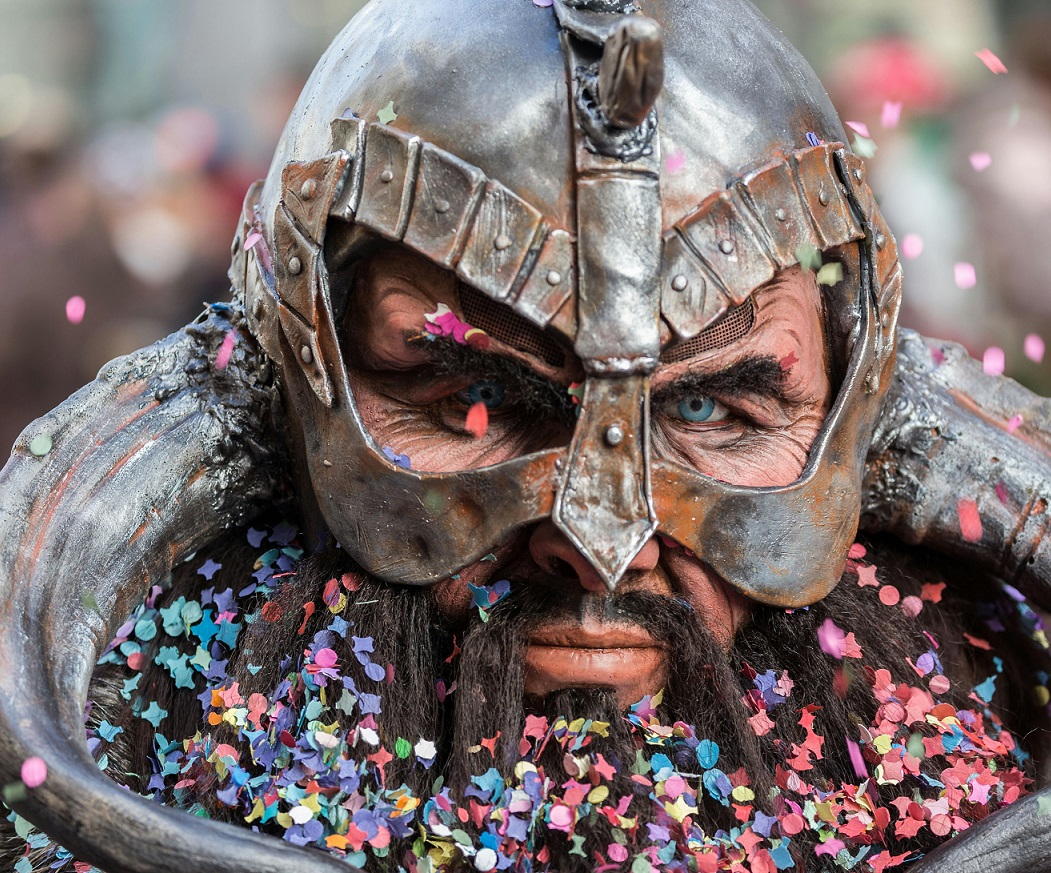
Inspired by some of the research and a collection of essays on Viking Culture By Gunnora Hallorva as well as Adam of Bremen’s Gesta Hammaburgensis ecclesiae Pontificum published in approximately 1080 on pre-Christian pagan religious practices in Sweden.
I have yet to meet a gay guy who have not heard of Tom of Finland. Frankly for most boys these sketches of hunks personify their earliest experiences of homoeroticism as art.
Having been a fan of Viking lore since my childhood, I’m not surprised that my first self- made toys resembled bad copies of Viking ships. Initially I used hollowed reeds then progressed to far more detailed versions of clay at the age of about 8. Boats were my favourite toys other than a Cowboy Roy set of toy revolvers with holsters. Later at the age of ten, I received two Action Man toy dolls with “real hair”, far more interesting and life like than the Ken dolls, and with real rubberised hands that could hold rifles and swords. My dream twins present came naked in two boxes labelled streakers! Great, now my gay side emerged as I needed to dress them in the right outfits! I immediately tried to find them Viking or Roman outfits, but the uniforms were primarily inspired by World War II, So I ended up with a French Foreign legionnaire for my blue-eyed blond soldier and the dark haired got dressed as an Arctic explorer. There were stunning German outfits, motorcycles and even a Tiger tank. Later I learned of Hitler’s Aryan fantasies, which was a pity as my blonde soldier scarred on the right cheek, looked good in the French legionnaire’s dark navy-blue coat with gold buttons and white trousers. Unsurprisingly, I ended up in the navy and experienced the real sensuality of uniformed athletic guys training for combat. The Action man Series was launched in 1966 by Palitoy in the UK which copied the success of GI Joe, introduced in 1964 by the US owners and producers, Hassenfield brothers. GI Joe represented the first doll for boys but was obviously marketed as an “Action Figure” and movable “Fighting Man” and unashamedly copied their almost identical American cousin, GI Joe. Gradually Pallitoy steered Action Man to have a more British character, which included more accessories and vehicles. In 1970 flock hair was introduced by Bill Pugh and the gripping hands was based on the left hand of chief designer, Bob Brechin.
As a young teenager I found that my fascination with the Vikings intensified as one of my classmates believed he was a descendant of the Vikings. He had the height, at over 1,8 metres at fourteen, but his dark hair and eyes were not so convincing. Our common fascination with Vikings were shared by many other teenage boys as well, as we were all dreaming of becoming sailors and many of us spent weekends sailing, surfing and paddle skiing. At almost sixteen, I became friends with the ultimate Viking teenage poster boy, at least, as I imagined what a young teenage Viking would have looked like. At sixteen Lars (name changed) was ten centimetres taller than me and at 1,87m towered over classmates and teachers alike. We were both blonde, blue eyed, loved classical music and lived in our own world. I discovered the pain of being madly infatuated with another boy, but like the Vikings could not express my feelings, unlike the Greeks and Romans, who were quite poetic when penning the intensity of love between brothers in arms. I was saved from myself because I changed schools again. I drowned myself in books to discover more about the great soldiers in history from Alexander the Great to the Japanese samurai, who also frequently fell in love with their brothers in arms and the celebration of gay love in Japan is known as “nanshoku”.
As a judoka I felt that our Christianised Bushido code was based on nonsense. A clear theme emerged that soldiers falling in love with a man was a common occurrence, but battles killed the most vulnerable soldiers in great numbers so getting women pregnant before setting off for battle was an important task to rebuild the strength of the clan. Women seldom replaced the special bond that these warriors had with each other and both the Greeks and Romans encouraged relationships until Christian culture and all its neurotic judgement tried to turn this love felt between men who faced the angel of death together into total taboo that would trigger Dante’s Inferno. Maybe, the greed of the catholic church banned clergy to marry and have families, as that would have endangered the power and the wealth of the Catholic Church. Priests who fostered brotherly bonds beyond platonic and spiritual relationships also threatened the Catholic Church.
Homosexuality in the Viking Age demonstrates that the Vikings had words and concepts of same-sex activity, but pragmatism and agricultural lifestyle required offspring to not only to work the farm but also to provide parental support in old age. So, whatever one’s sexual preferences, marriage and reproduction was crucial for survival. The concept of living as gay couples in the Viking Age (793–1066 AD) did not exist in most cultures until present day. Sexual partners did not matter, as long as you married and procreated. Scandinavians who attempted to avoid marriage because of their sexuality were penalised legally. It was fine to have intercourse with another man if he topped, but bottoms were regarded with derision, especially as Christian dogma became the norm in Scandinavia after the thirteenth and fourteenth centuries following the pagan period. Myths and legends reveal honoured gods and heroes participated in homosexual acts, indicating that pre-Christian Viking Scandinavia was tolerant of homosexuality.
The Old Norse word used in the law code and literature for an insult was níð, which may be defined as “libel, insult, scorn, lawlessness, cowardice, sexual perversion, homosexuality”. Níð was part of a family of concepts which all have connotations of passive male homosexuality, such as: ergi or regi (nouns) and argr or ragr (the adjective form of ergi) (“willing or inclined to play or interested in playing the female part in sexual relations with another man, unmanly, effeminate, cowardly”)
The secular laws of Viking Age Iceland do not mention homosexuality. The only place where homosexuality is prohibited is by the Christian Church, whereas Scandinavians attached disapproval only to the male who was homosexually passive.
Homosexuality was not regarded by the Vikings as being evil, perverted, innately against the laws of nature or any of the other Christian dogma baggage that infiltrated medieval European culture. Rather, it was felt that a man who subjected himself to another in sexual affairs would be a follower rather than a leader, and allowing others to do his thinking or fighting for him. Thus, homosexual sex was not what was condemned, but rather the failure to stand for one’s self and make one’s own decisions, to fight one’s own fights, which went directly against the Nordic ethic of self-reliance. Defeated enemies were frequently raped or castrated. We do not know if the Vikings regarded oral sex between men unfavourably or not, but the Vikings considered that old age caused a man to become argr. A well-known proverb stated svá ergisk hverr sem eldisk, “everyone gets argr as he gets older.” Possibly this suggests that homosexuality after a man had raised a family and grew older, or for a man who could not have children (whether due to impotence, sterility, age, etc.) homosexual relations may have been acceptable.
Vikings were short fused, so if you annoyed a Viking, violence frequently followed. Scandinavian law codes made certain types of insults illegal, and either condoned the victim’s slaying of the slanderer or penalised the utterance of insults with outlawry. Calling a man effeminate for example would be covered under the Icelandic law code Grágás (ca. 1100-1200 C.E.) and give the right to avenge with combat.
Certain of the gods, heroes and highly respected priests of the gods, apparently indulged in homosexual, “unmanly” or “questionable” practices. Loki, of course, is clearly bisexual as he certainly took the female role sexually at least during the encounter with the giant’s stallion in Gylfaginning, which says that “Loki had had such dealings with Svaðilfari (the stallion) that sometime later he bore a foal.”
Homosexuals played a role within the worship of the Vanir gods (a group of gods associated with health, fertility, wisdom, and the ability to see the future), and some of the camp priests of the god of fertility and prosperity, Freyr, possibly wore their hair in styles reserved normally for women or even dressed themselves as women.
Some men acted as homosexual concubines or prostitutes and these men selling sex to other men would have been of the lowest social class (karras).
Some art-historical evidence shows small gold foil plaques known as goldgubber which depict a couple embracing. Frequently these are assumed to be Freyr, god of fertility, and Gerð, the beautiful giant maiden. Looking closely, at least two of the surviving goldgubber depict same-sex couples embracing, one depicts two bearded figures, another two women with the typical long, knotted hair, large breasts, and trailing dresses! Since these plaques in general are associated with weddings and sexual union, it is tempting to assume that these two same sex examples represent and/or commemorate homosexual relationships.
Most importantly these accounts written in 1200-1300 were written by Christian men, using the Christian technology of writing, and whose worldview condemned homosexuality. If homosexuals enjoyed a better reputation earlier than these accounts, we have no record of it, as the “golden age” of the culture probably occurred between 600 and 800, before the actual start of the Viking Age proper, and is unrecorded except dimly through legends.
The secular laws of Viking Age Iceland do not mention homosexuality. The only place where homosexuality is documentably prohibited is by the Christian Church.
History belongs to the writer, so there is little doubt that Paganism and ancient cultures would often follow the later Christian interpretation of what was acceptable or not. In cultures with refined archival records and art it was far more complex to erase earlier history.
Homoerotic images of muscled soldiers remain a popular theme in books and movies and we are entering an age where there is massive growth in this genre.


