
As total debt in developing countries has risen to a record high, there is frustration that existing frameworks, dominated by Western governments, have exerted undue influence over the repayment policies.
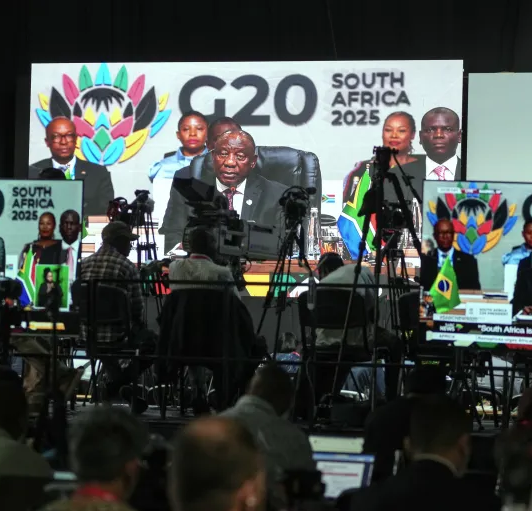
Heads of state from the world’s most powerful countries gathered in Johannesburg, South Africa, over the weekend for a summit that had been billed, under South Africa’s G20 presidency, as a turning point for addressing debt distress across the Global South.
South African President Cyril Ramaphosa had consistently framed the issue as central to his agenda, arguing that spiralling repayment costs have left governments, particularly in Africa, with little room to fund essential services like healthcare and education.
But despite repeated pledges – including in the leaders’ summit declaration to “strengthen the implementation of the G20 Common Framework” – South Africa did not deliver any new proposals for easing fiscal constraints in indebted nations.
Hopes that world leaders would use the G20 summit to tackle sovereign debt distress were further dashed when United States President Donald Trump, at odds with South Africa over domestic policies, skipped the meeting altogether amid Washington’s retreat from multilateralism.
The summit also marked the close of a brief period of Global South leadership in the G20, following presidencies held by Indonesia in 2022, India in 2023, and Brazil in 2024. The US is set to assume the G20 presidency on December 1.
Debt ‘vulnerabilities’
The G20 – which consists of 19 advanced and emerging economies, the European Union and the African Union – represents 85 percent of global gross domestic product (GDP) and roughly two-thirds of the world’s population.
In October, G20 finance ministers and central bank chiefs met in Washington and agreed to a consensus statement on debt.
“We recognise that a high level of debt is one of the obstacles to inclusive growth in many developing economies, which limits their ability to invest in infrastructure, disaster resilience, healthcare, education and other development needs,” the statement said.
It also pledged to “reaffirm our commitment to support efforts by low- and middle-income countries to address debt vulnerabilities in an effective, comprehensive and systematic manner”.
The communique committed to improving the much-criticised Common Framework, a mechanism launched by the G20 five years ago to accelerate and simplify debt restructuring – when countries have to reprofile debts they can no longer afford to repay.


