
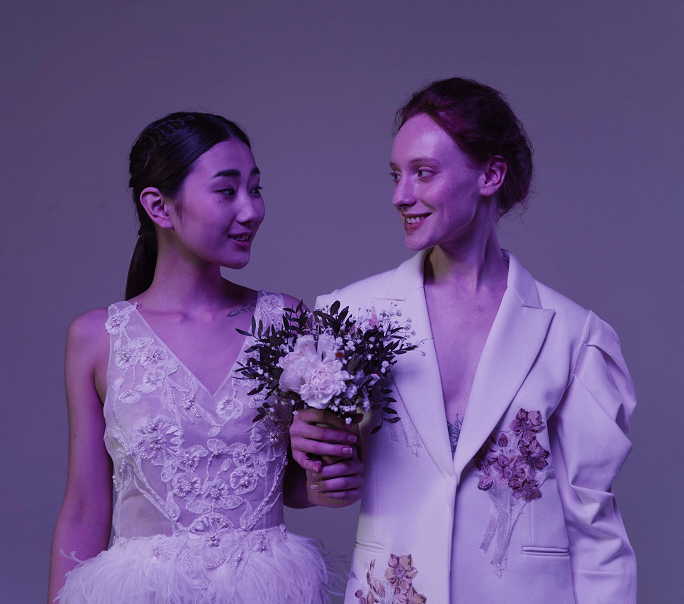


According to the Ministry of Health, Labor and Welfare, 35.5% of marriages in Japan end up in divorce.
By Eric Margolis
And the rate is even higher among international marriages: More than half fail. That alone speaks volumes on how difficult it can be to maintain a cross-cultural relationship.
Studies by the Pew Research Center have observed a similar trend, with 41% of interracial couples in the United States separating, compared to just 31% of those who married within their own race.
The numbers in Japan vary greatly depending on the specific nationality and gender mix. More than 57% of marriages between a Japanese man and a Chinese or Korean woman end in divorce. Per Ricon Pro, a Japanese divorce support service, cultural barriers come to the forefront here as East Asian tendencies to involve the whole family in a marriage put pressure on the couple. Meanwhile, a stunning 68% of couples made up of a Japanese man and Filipino woman divorced, with financial and economic disagreements and difficulties cited as the primary causes.
Some combinations fared much better, including marriages between American men and Japanese women. The 32% divorce rate here is a tick lower than that of Japanese couples. Ricon Pro cites mutual cultural respect and fewer economic struggles as the driving cause of these marriages’ relative success.
Billy Cleary, a licensed marriage and family therapist at TELL Counseling in Tokyo, explains that different cultures can have varying styles of attachment, which can drive a wedge between couples when not communicated.
“It’s very common that differing expectations about attachment needs can lead to misunderstandings, miscues in communication, and conflict,” Cleary says. “One individual might focus more on the couple dynamic and the other on family cohesiveness. It doesn’t mean that the other partner doesn’t care, but it creates tension and conflict when there’s misalignment on what those expectations are.”
Although horror stories garner the most news coverage and social media buzz, not all international marriages are doomed. After diving into the contemporary dating scene as well as the sticky racial and cultural issues that underpin cross-cultural relationships in Japan, I interviewed couples to investigate how international and even long-distance relationships can succeed for the long haul. As with the previous article, some of the people I spoke to asked for aliases in order to respect the privacy of their spouses and former spouses, allowing them to speak about their experiences (even painful ones) in a more honest way.
Heartfelt interest inspires success
There was one consistent theme among the diverse couples I spoke to for this story: Each partner had a genuine interest in the other’s culture. In addition, the process of learning and growing by engaging with that culture deepened these relationships.
American Liane Wakabayashi, whose 2020 memoir “The Wagamama Bride” chronicles her cross-cultural marriage, says her relationship with her Japanese husband grew out of her time in his eastern medicine clinic.
“I didn’t know I was on a spiritual path,” she says. “I was fascinated with the whole (Taoist) framework that Aki (my husband) presented me with. And he was walking the walk — he came from a place of being at rock-bottom health-wise, and now he was dedicated to improving his health.”
But cultural inspiration doesn’t need to be as deep as Taoist philosophy. Kei Nakamura, a 25-year-old from Tokyo, continued a long-distance relationship with his American ex-girlfriend for a year and a half before it was clear that the COVID-19 pandemic rendered meeting each other impossible. For Nakamura, the relationship was rooted in the simple act of sharing perspectives.
“Every single day, I learned something new from her,” he says. “She taught me English writing — I taught her sports and Japanese.”
Jim Hearst, a 34-year-old from England living in Nagoya just got engaged to his Japanese fiancee last fall. “Even just being able to sit down and watch a British TV show I really like and that she doesn’t know at all — we watch it together, she gets really invested into it, she engages with it,” he explains. “That makes me feel quite happy, like she’s really engaging with my culture.”
A gulf in values can lead to failure
Beyond logistical challenges like language barriers and visas, a gap in cultural values, especially when it comes to child-rearing, can be devastating. A 25-year-old English teacher, Sofia Martinez’s relationship with her conservative, Christian family soured when they learned that she had married a Japanese man.
After a few years, her family came around to love and appreciate her husband, but Martinez is bracing herself for further conflicts.
“We carry this weight of not knowing whether — even if our families 100% spoke the same language — they would be able to overcome their differences,” Martinez says. “When we have kids, our families are both going to want to have influential roles in their lives, but they’re going to want a very specific lifestyle for their grandkids.”
Martinez says she and her husband discuss this often in order to prepare themselves. “I don’t intend to push religion onto my kids, but I am very spiritual,” she says. “But from my husband’s personal experiences, religion has left a bad taste in his mouth.”
Differences in perspectives around raising children were exactly what led to the end of Wakabayashi’s marriage after more than 20 years. Both of her children were struggling in traditional Japanese schooling, but her husband couldn’t accept her desire to move them out of the country.
“Biracial, bilingual children have double identities to work out and yet they are sliced in half by the harshness of social judgment in Japan,” Wakabayashi says. “My son became desperate to leave Japan, and he was someone who was well-adjusted and excelled academically. So when he was floundering (too), I realized I had to get them out.”
The high bar of long distance
Constant communication, planning around time differences, knowing the others’ schedule, trusting them around the opposite sex, gifts and planning visits — all of these are musts, but can still fail in the face of not knowing where a long-distance relationship is going. Such remoteness can cut apart even the strongest relationship like a knife.
“(It) was hell,” Nakamura says. “There was no goal for us to be able to see each other next since the border was shut down. And I genuinely felt the importance of physical touch and skinship.”
Nakamura and his girlfriend did everything they could: video calls day and night (even in the middle of job-hunting), watching movies online together, phone sex. “I’d never do long distance again,” he says. “It just hurts. No matter how you commit yourself to maintaining the relationship, your feelings drift apart due to (the) lack of time you share with them.”
Long-distance relationships, especially between faraway countries, need concrete goals to work toward. That means deciding the next date you are going to meet in person well in advance and having a specific vision for a future life together.
For married couples, long-distance relationships require exceptional coping skills. “It’s never easy, but there is the capacity to develop resilience even when the partner isn’t physically present,” Cleary says.
Advice from the experienced
The decline in Japan’s marriage rate has been well recorded. Men’s unchanging expectations for women to take the lead on family affairs conflict with women pushing for shared responsibilities. Stagnant economic growth has made marriage and child-rearing a financial challenge for many couples. Throw on the layers of cultural and practical barriers to an interracial or cross-national relationship and making one of these relationships work can feel nigh impossible from afar.
Cleary says that a relationship focus should be to build a secure emotional bond through communication. “A key goal is awareness: being aware of your own attachment needs and the triggers that make you insecure. Pay attention to how you communicate your needs to your partner.”
Cross-cultural couples can have the unique ability to excel at understanding their partner’s attachment needs. “Wanting to get to know and be supportive of the other person’s culture leads to a greater capacity for empathy and understanding,” Cleary says. “Never lose your wonder in trying to discover your partner.”
Several couples I interviewed emphasized taking a step back and being logical about a relationship. “My advice would be to listen more to your head than your heart,” Hearst says. “If you’re thinking about taking that next step, be very clinical about it: Write down a list of pros and cons, just for yourself.
“I know people who are in their 40s and 50s who have been here for 20 years, don’t speak the language and are miserable because they’re in a relationship they can’t get out of.”
Martinez also made her decision to marry her husband using an extremely practical lens. “Sometimes love just isn’t enough,” she says. “I thought about it logically, making sure that, even if I moved to Japan and we got divorced, I’d be able to financially support myself in a foreign country.”
All agreed on one absolute condition to make any cross-cultural relationship work: Both partners have to be willing to move away from home.
“If someone says to you, I’ll never leave this job, I’ll never leave my hometown, those are really big red flags,” Wakabayashi says. “You must be strong enough to ask for your partner’s commitment to say that if Japan isn’t OK, then you’re going back to your country or a third country.”
As frightening as the prospect is, with enough courage and a strong support network, even divorce can be the right decision. “Divorce can be a beautiful thing,” Wakabayashi says. “Because when you’re not living your truth, you wake up every day and look in the mirror and say, ‘That’s not me. I don’t know that person.’”
Source: https://www.japantimes.co.jp/community/2023/04/10/issues/take-make-long-term-relationship-great-japan/


