Honoring the history and the impact of LGBTQ people on the United States across a variety of fields, The LGBTQ Almanac is a fascinating mix of biographies, little-known or misunderstood historical facts, enlightening essays on significant legislation, and cultural changes. It features a large collection of 450 biographies of both celebrated and lesser-known influencers in the community.
This massive tome is devoted to illustrating the history of LGBTQ+ people in pop culture, politics, sports, media, religion, science, and more. Commemorating and honoring queer achievements, honors, and influence, it brings to light all there is to admire and discover about LGBTQ+ Americans. Numerous photographs and illustrations, a helpful bibliography, and an extensive index add to its usefulness.
Milestones in TV
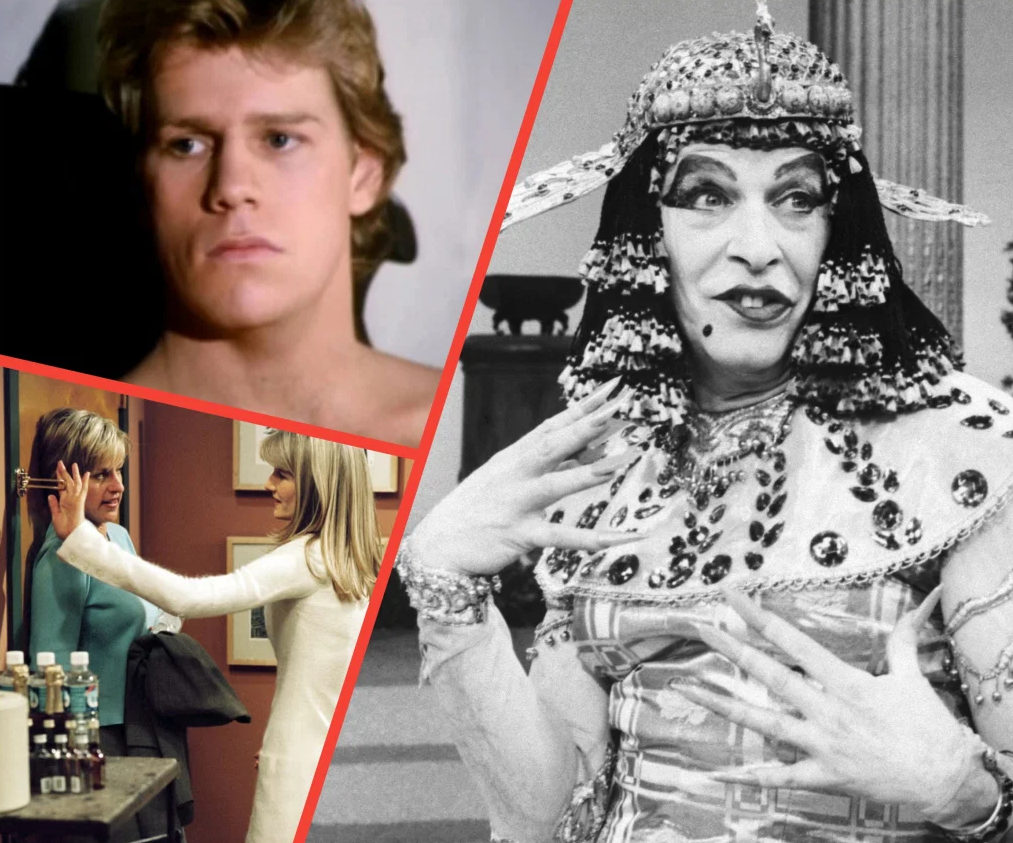
1948. One of the most popular entertainments offered on the fledgling medium of television are comedy–variety programs featuring such former vaudevillians as comedians Milton Berle, Bob Hope, and Jack Benny. In 1948, Berle becomes the permanent host of the Texaco Star Theater, which is renamed the Milton Berle Show in 1955. Popularly known as “Uncle Miltie” and “Mr. Television,” Berle routinely dresses in female drag during the variety show’s comedy skits, including in a skit with Bob Hope, who is also in drag. Characters and performers in drag would appear in several shows throughout television history, one of the most influential of which was the reality show RuPaul’s Drag Race, which debuted in 2009.
1961. The Rejected, the first made-for-television documentary film about gay men, is produced independently by John W. Reavis for the San Francisco TV station KQED, which broadcasts the program on September 11. Reavis’s goal is to present “as objective analysis of the subject [of homosexuality] as possible without being overly clinical.” To that end, the film features interviews with gay men and the opinions of professionals and community leaders such as anthropologist Margaret Mead, Episcopal bishop James Pike, psychiatrist Karl Bowman, and openly gay Mattachine Society president Hal Call together with other society members. The documentary is later syndicated to National Education Television (NET) stations across the United States.
1967. The TV career of iconic costume and fashion designer Bob Mackie (1939–) takes off when he begins an 11-year engagement as designer for The Carol Burnett Show. Among his many memorable costume designs is the famous curtain dress worn by Burnett in “Went with the Wind,” the show’s well-loved spoof of the classic film Gone with the Wind. Mackie’s designs for singer–actor Cher become equally famous. Mackie had been discovered by legendary costumer Edith Head at Paramount Pictures in 1961 and received his first big break in 1963 designing for The Judy Garland Show, where he met his life partner, designer Ray Aghayan (1928–2011).
1972. The ABC Movie of the Week broadcasts the made-for-television drama That Certain Summer, which concerns a father in a same-sex relationship who must come out to his 14-year-old son. The realistic and sympathetically rendered film is considered to be the first television drama to positively depict a stable, same-sex couple and the first to feature a gay parent. TV’s first recurring openly gay character appears on summer replacement sitcom The Corner Bar, featuring the denizens of a New York City tavern called Grant’s Toomb. The gay character, Peter Panama, is stereotyped as a flamboyant, ascot- wearing set designer.
Related*
Revisiting ‘That Certain Summer,’ the gay made-for-TV movie that made history… in 1972!
It’s considered the first network drama depicting a happy gay couple—except the guys were barely even allowed to look at each other!
1973. A new TV genre, the reality show, debuts on PBS with An American Family, which chronicles the lives of Santa Barbara, California, couple Pat and Bill Loud and their five children over 12 one-hour, weekly episodes. A significant moment in television and LGBTQ+ history happens in the second episode, when eldest son, Lance (1951–2001), comes out to his parents as gay. The charismatic Lance becomes the popular show’s leading personality and is seen as a gay icon.
1977. Soap, a sitcom parody of daytime soap operas, debuts on ABC. The series features comedian–actor Billy Crystal as Jodie Dallas and is the first recurring openly gay leading character in a primetime series. A complex character seen navigating relationships with other men and considering gender reassignment surgery, Jodie marked an important step toward greater visibility for LGBTQ+ characters on mainstream television. The show faces criticism before its debut from the International Union of Gay Athletes and the National Gay Task Force over concerns about the way Jodie and his closeted pro football player lover, Dennis, will be portrayed and, after its airing, from religious groups for its “raunchiness.”
As the show continues, Jodie and Dennis break up and Jodie becomes engaged to a woman, sparking some backlash from LGBTQ+ groups over the character’s inconsistency concerning his sexual identity. On October 1, the first serious depiction of a transgender character on network television comprises the storyline of a season 4 episode of the popular sitcom The Jeffersons, in which George Jefferson’s Navy buddy Eddie reveals that he has undergone gender transition and is now living as Edie. On October 9 in a critically acclaimed, Emmy Award–winning episode of All in the Family, Edith Bunker discovers that her cousin, Liz, who has recently passed away, had been in a long-term lesbian relationship. The plot revolves around a valuable tea set that was treasured by the couple, which has been left to Edith as part of her cousin’s estate. Edith must convince Archie that Liz’s partner, Victoria, deserves to keep the family heirloom.
1981. The prime-time soap opera Dynasty is the first soap to include an openly gay character, Steven Carrington. The character’s arc addresses his struggles with his sexual orientation and his relationships.
1982. All My Children becomes the first daytime soap opera to feature an openly LGBTQ+ character and the first openly lesbian character, psychologist Dr. Lynn Carson.
1985. The NBC TV film An Early Frost, which tells the story of a young, gay man who returns home to tell his family that he has AIDS, is the first major American television program to address the HIV/AIDS crisis. The film is groundbreaking for its depiction of the struggles faced by those with HIV/AIDS as well as the challenges of being openly gay.
1989. The NBC legal drama L.A. Law features the first same-sex kiss on American television, shared by characters Abby Perkins (Michele Greene) and C. J. Lamb (Amanda Donohoe).
1994. Enrique “Rickie” Vasquez (Wilson Cruz) on the teen drama My So-Called Life is the first openly gay teenager portrayed on American television. The show offers an honest and empathetic look at the struggles of a gay teen, including bullying and the search for acceptance.
1997. The character Ellen Morgan in the sitcom Ellen comes out as gay shortly after the show’s star, Ellen DeGeneres, came out. The episode, known as “The Puppy Episode,” makes television history and is a positive watershed moment for lesbian and gay visibility, but it also ignites some controversy over its subsequent queer content, prompting ABC to add a parental advisory at the beginning of each episode.
1998. The influential sitcom Will & Grace debuts and becomes one of the most successful sitcoms ever to feature gay characters, with Will Truman (Eric McCormack) and Jack McFarland (Sean Hayes) portrayed as openly gay men. The show helps to normalize LGBTQ+ characters and relationships on mainstream television and is praised for its positive representation of the gay community.
2000. The American version of the British series Queer as Folk premieres on the premium TV station Showtime. Set in Pittsburgh, Pennsylvania, it is the first American television drama to focus entirely on the lives of gay men and depicts a network’s first explicit sex scene between two men. The series includes a lesbian couple and addresses such topics as relationships, diversity within the community, HIV/AIDS, coming out, and family acceptance. Showtime debuts The L Word, a groundbreaking series focusing on the lives of a group of lesbian and bisexual women in Los Angeles. A drama that explores the complexities of the characters’ relationships and identity, The L Word has remained an iconic series within the queer community. A sequel, The L Word: Generation Q, brought back fan-favorite characters and introduced new ones and ran from 2019 to 2023.
2003. The first reality show with LGBTQ+ hosts, Queer Eye, initially broadcast as Queer Eye for the Straight Guy, premieres on Bravo and becomes a cultural phenomenon. The series features five openly gay men, professionals in a variety of fields, performing lifestyle makeovers for straight men. A positive and celebratory portrayal of gay men, the show challenges stereotypes and helps to expand the public’s view of gay men in American society. A short-lived spin-off, Queer Eye for the Straight Girl, debuts in 2005 and features four host–experts made up of three gay men and a woman, Honey Labrador, who is a lesbian.
2009. On July 16, Andy Cohen, an executive producer of The Real Housewives franchise, makes TV history as the first openly gay late night talk show host when his show Watch What Happens Live! debuts on Bravo. The same year sees the debut of the critically acclaimed, multi-award-winning ABC sitcom Modern Family (2009–2020), which centers on three interrelated suburban Los Angeles families, one of which is headed by openly gay couple Mitchell Pritchett and Cameron Tucker. The characters quickly become fan favorites, and the series, which includes the first same sex wedding on prime-time network TV, is praised for its portrayal of a family that reflects a diverse America.
2013. Netflix’s women’s prison comedy– drama Orange Is the New Black debuts and earns accolades for its diverse cast of LGBTQ+ characters, which includes inmate Sophia Burset, a transgender woman of color played by transgender actress and activist Laverne Cox. Cox becomes the first openly transgender person to be nominated for an Emmy Award and the first trans woman to win one in 2015 when she receives a Daytime Emmy as executive producer of Laverne Cox Presents: The T Word.
2015. The cast of Empire, a Fox music drama centered on a fictional hip-hop music and entertainment company, includes Jussie Smollett as an openly gay musician struggling to gain acceptance from his father. The groundbreaking show is the first to feature a Black gay man as a central character in a major network drama and addresses issues of homophobia in the African American community and the music industry. Transparent, the first comedy– drama series to center around a transgender character, premieres on Amazon and stars Jeffrey Tambor as trans parent Maura Pfefferman. The series goes on to win multiple awards for its groundbreaking portrayal of transgender issues, including a Golden Globe and two Emmys for Tambor as Outstanding Lead Actor in a Comedy Series.
2017. Pose, an FX series exploring the lives of LGBTQ+ African American and Latinx communities involved in New York’s drag ball culture in the 1980s and 1990s, makes history with the largest cast ever of transgender actors of color in regular roles for a scripted series. Pose is also groundbreaking for its representation of the transgender community and for bringing the stories of queer people of color to mainstream audiences. Cast member Billy Porter becomes the first openly Black gay actor to win an Emmy Award in the Outstanding Lead Actor in a Drama Series category.
2018. Notable for its portrayal of queer Latina women and its exploration of cultural identity, family dynamics, and gentrification, the Starz series Vida concerns two sisters who move back to their childhood home in Los Angeles after their mother’s death. There, they discover that their mother had a secret lesbian relationship.
2019. The superhero series Batwoman, based on the DC Comics character, debuts on the CW network, with Ruby Rose as the openly lesbian title character Batwoman/Kate Kane, a cousin of caped crusader Batman/Bruce Wayne. Although Batman: The Animated Series (1992–1995) is the first TV series to include a lesbian superhero in the character of Renee Montoya, a police officer who becomes a crime-fighter known as The Question, Batwoman is the first live-action series in the action genre to be centered around a lesbian character.
2020. Love, Victor, a series focusing on a gay teen that was inspired by the 2018 comedy film Love, Simon, debuts on the streaming platform Hulu. The series receives critical acclaim as well as several awards during its three seasons.
2021. Despite the greater inclusion of LGBTQ+ themes and characters on TV in the 21st century, bisexuality has remained underrepresented. Bisexuality is a feature of the HBO Max comedy series Hacks, which stars Hannah Einbinder as a young, openly bisexual comedy writer hired to write a new act for veteran Las Vegas standup comedian Deborah Vance (Jean Smart).
For more on television history, see the biographies for Ilene Chaiken, Laverne Cox, Ellen DeGeneres, Tim Gunn, Nathan Lane, Armistead Maupin, Janet Mock, Ryan Murphy, Cynthia Nixon, Rosie O’Donnell, RuPaul, George Takei, Lily Tomlin, Robin Tyler, Lana Wachowski, and Lilly Wachowski.