
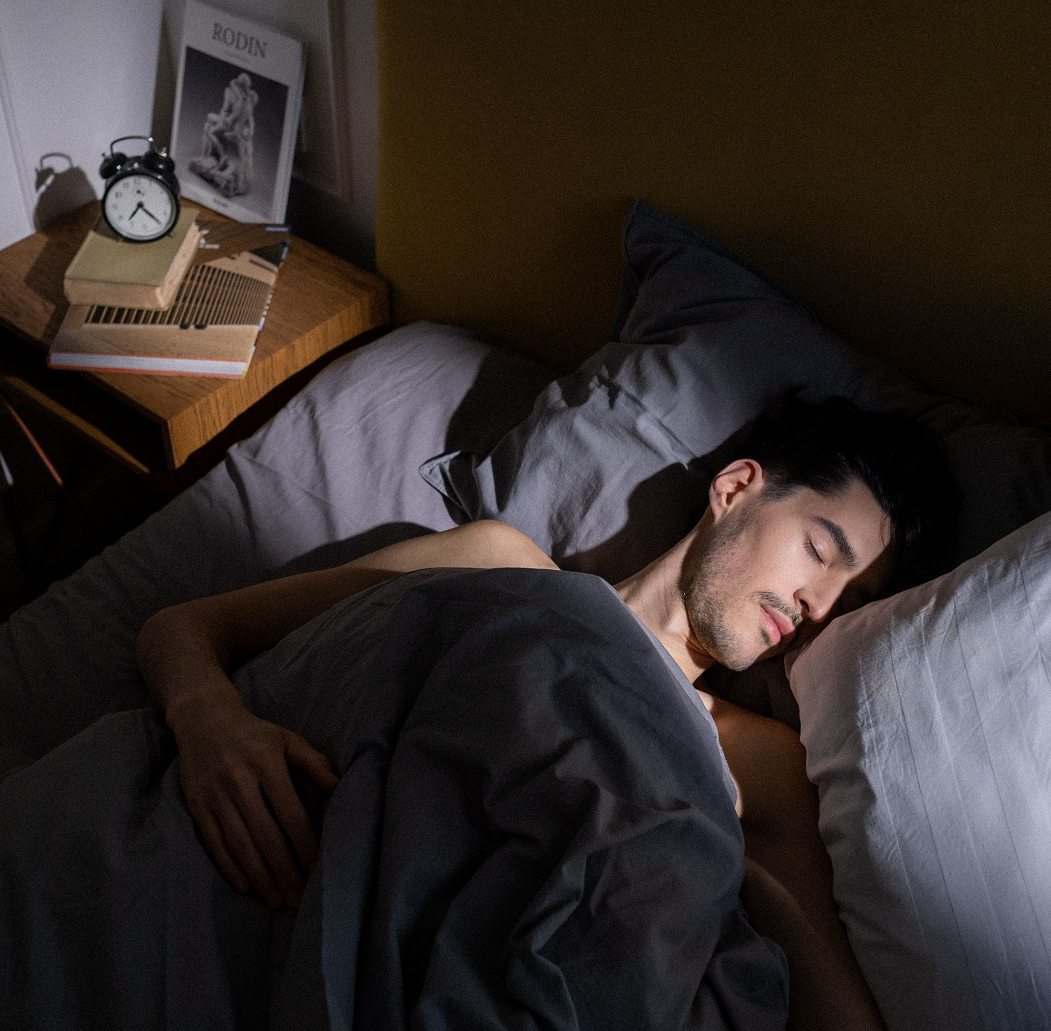
For many of us, the idea of getting a solid eight hours of uninterrupted sleep has become almost sacred.
We hear it from doctors, health magazines, fitness gurus and even our smart watches. But what if the way humans naturally sleep is rather more complicated than we’ve been led to believe?
Sleep researchers now understand that a night’s rest is far from a passive state. Instead, our brains move through a series of repeating cycles made up of two distinct phases: Non-Rapid Eye Movement (NREM) sleep and Rapid Eye Movement (REM) sleep. Each cycle lasts roughly 90 to 110 minutes and is repeated four to six times throughout the night.
NREM sleep occupies around three-quarters of our sleeping hours. It is during this phase that the body repairs muscles and tissues, the immune system is strengthened, heart rate slows and the brain consolidates memories. REM sleep, by contrast, is when the brain becomes highly active and vivid dreaming usually occurs. Although we may be completely still on the outside, our brains are remarkably busy behind the scenes.
The really intriguing part, however, isn’t the science of sleep itself—it’s how our ancestors slept.
Historian Dr Roger Ekirch has spent decades studying medieval diaries, court records, letters and literature, discovering hundreds of references to what people simply called “first sleep” and “second sleep”. Before artificial lighting and the demands of industrial working hours, many people naturally slept in two separate periods rather than one uninterrupted block.
Typically, they would retire soon after sunset, sleep for around four hours, wake naturally for an hour or two, and then return to bed for another four hours before dawn. Rather than tossing and turning with anxiety, this period of wakefulness was considered perfectly normal. People used the quiet hours for prayer, reading, gentle conversation or simply reflecting on their dreams before settling down again.
This historical pattern raises an interesting question. If you occasionally wake during the night, could your body simply be behaving in a way that was once entirely natural?
That doesn’t necessarily mean everyone should abandon modern sleep habits. Our lifestyles are very different from those of medieval Europe, and regular sleep remains essential for good health. However, it does remind us that waking briefly in the middle of the night is not always a sign that something is wrong.
The famous “eight hours of sleep” recommendation also has an interesting history. Contrary to popular myth, it wasn’t invented by mattress manufacturers. Its roots lie in the nineteenth-century labour movement, where campaigners argued for a balanced day consisting of “eight hours’ work, eight hours’ recreation and eight hours’ rest”. As sleep science developed during the twentieth century, researchers found that many adults naturally function well on around eight hours of sleep, reinforcing the idea.
Today, however, sleep specialists take a more flexible approach. Rather than insisting on exactly eight hours, organisations such as the National Sleep Foundation and the US Centers for Disease Control and Prevention recommend that most healthy adults aim for around seven to nine hours of sleep each night. Some people genuinely feel refreshed after seven hours, while others need closer to nine. Genetics, age, health and activity levels all play a part.
Perhaps the most reassuring lesson is that there is no single “perfect” sleeper. Some people drift off the moment their head touches the pillow, while others wake briefly during the night. What matters most is whether you wake feeling rested and whether your sleep supports your physical and mental wellbeing.
So, the next time you find yourself awake at three in the morning, try not to panic. Instead of watching the clock and worrying that you’ve “failed” at sleeping, remember that your brain may simply be following an ancient rhythm that has accompanied humanity for centuries.
Sleep, it seems, has always been a little more fascinating—and a little less predictable—than the simple rule of eight hours might suggest.
Sources
- Roger Ekirch, At Day’s Close: Night in Times Past (W. W. Norton & Company).
- National Sleep Foundation – Sleep stages and recommended sleep duration.
- US Centers for Disease Control and Prevention (CDC) – Adult sleep recommendations.
- Sleep Foundation – Overview of sleep cycles, REM and NREM sleep.


