
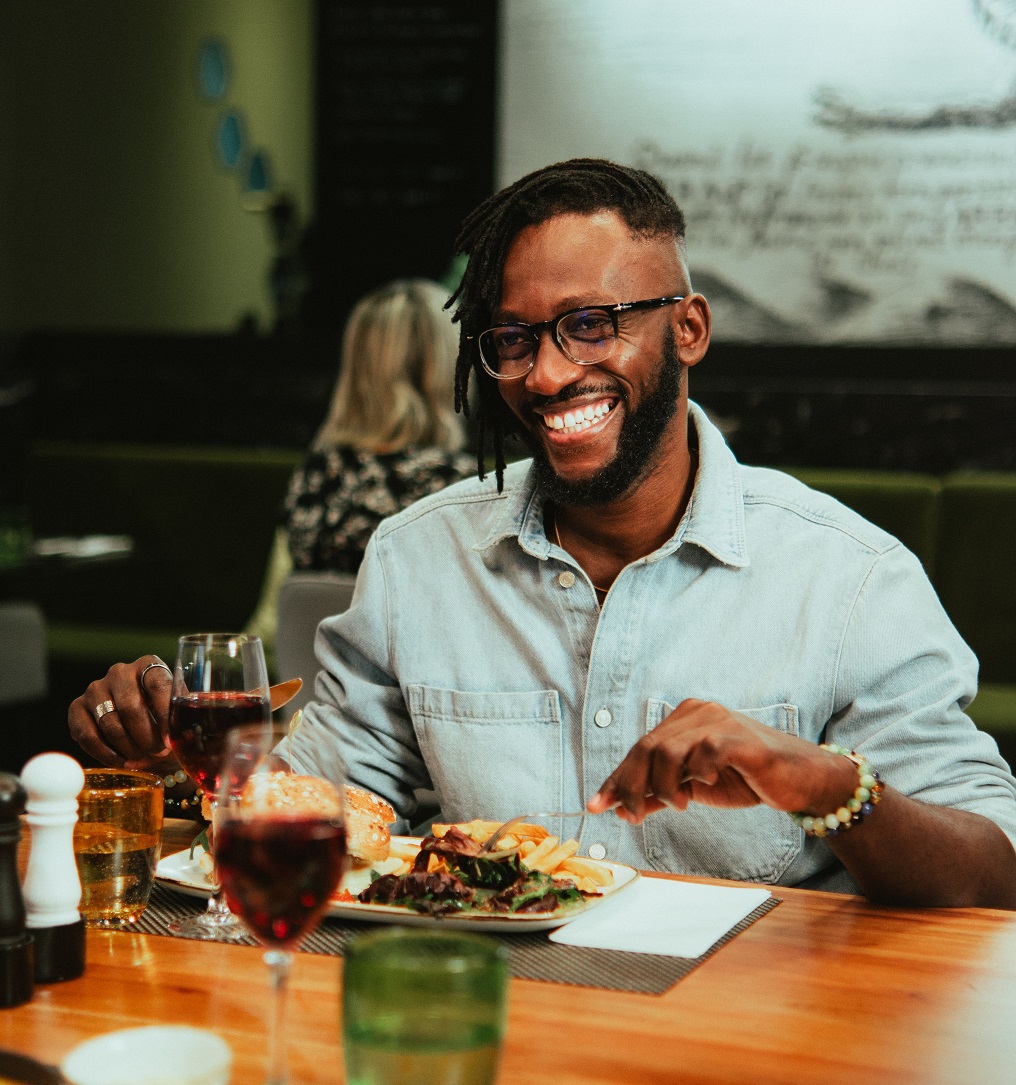
For decades, the story told about queer life was almost entirely one of coupledom — find a partner, settle down, mirror the milestones straight society had long prescribed.
By Alan Samons
Yet a quieter, more introspective trend has been gathering pace: self-partnering. Far from being a euphemism for being single, self-partnering describes a deliberate, values-driven choice to build a full, rich life centred on one’s relationship with oneself, rather than treating partnership as the default destination. Within the gay community particularly, this shift is proving not just liberating but genuinely transformative.
What Self-Partnering Actually Means
Self-partnering isn’t simply “being single and fine with it.” It’s an active practice — treating oneself with the same commitment, care and intentionality one might once have reserved for a romantic partner. That might mean booking solo travel without waiting for a plus-one, investing seriously in a home rather than treating it as a temporary bachelor pad, or prioritising therapy, hobbies and friendships as central pillars of a fulfilling life rather than fillers between relationships.
For many gay men and women, this reframing carries particular resonance. Historically, queer people often came of age without the relationship scripts heterosexual peers absorbed from childhood — no fairy tales modelling their romantic future, few visible long-term couples to emulate. In some ways, this absence of a template, once experienced as a loss, has become an unexpected freedom: without an inherited blueprint to follow, many are choosing to write their own.
Why It’s Flourishing Now
Several cultural currents have converged to make this moment ripe for self-partnering. Greater social acceptance has removed some of the urgency that once pushed queer people toward partnership as a form of validation or safety. When being coupled is no longer the only path to social legitimacy, choosing to remain single can be exactly that — a choice, rather than a consolation prize.
There’s also a broader generational shift towards wellbeing and self-knowledge. Therapy-speak has entered everyday conversation, and with it a heightened awareness that unresolved patterns brought into relationships rarely resolve simply by finding “the one.” Many within the community are choosing to do that inner work solo first, arriving at future relationships — should they want one — from a place of wholeness rather than need.
Dating app fatigue plays a role too. After years of swiping, ghosting and situationships, a growing number are stepping back not out of bitterness, but from a genuine reassessment of what they want their time and energy to be spent on.
The Positive Ripple Effects
The benefits being reported are considerable. Chief among them is a marked increase in self-esteem and self-knowledge. When your sense of worth isn’t tethered to romantic validation, it tends to become more stable and self-generated. Many describe finally being able to distinguish their authentic preferences — in career, home, lifestyle, even friendships — from ones shaped by anticipating a partner’s needs.
Financial independence often flourishes too. Freed from compromise over spending or long-term plans, self-partnered individuals frequently report greater confidence in pursuing ambitious career moves, property purchases, or creative projects entirely on their own terms.
Friendships are also flourishing. With romantic partnership no longer positioned as life’s central relationship, platonic bonds are increasingly treated with the depth and permanence once reserved for romance. Many self-partnered gay men and women speak of building “chosen family” structures that offer profound emotional support — arguably one of the community’s most enduring and beautiful traditions, now given fresh emphasis. Also, with strong chosen family bonds, one is assured of friendship and support in old age. Relationships come and go, and should you be overly focussed on your partner, and neglect friendships, should your partner fall away late in life, loneliness and isolation almost certainly awaits.
Crucially, self-partnering isn’t necessarily permanent, nor is it anti-relationship. Many who embrace it describe it as a season rather than a life sentence — a period of deliberate self-investment that, should a relationship come along later, leaves them entering it from strength rather than scarcity. Others find they’re perfectly content to continue indefinitely, having discovered that a life doesn’t require a partner to feel complete.
A Redefinition Worth Celebrating
Perhaps what’s most encouraging about this trend is what it says about the gay community’s evolving relationship with itself. Where once singlehood might have been quietly mourned, it’s increasingly being celebrated as a legitimate, even enviable, way to live. Self-partnering represents a maturing of queer culture — one where love, care and commitment are no longer things reserved exclusively for another person, but can be extended, wholeheartedly, to oneself first.
In an era where authenticity is prized above almost anything else, choosing to partner with yourself might just be one of the most honest relationships anyone can have.


