
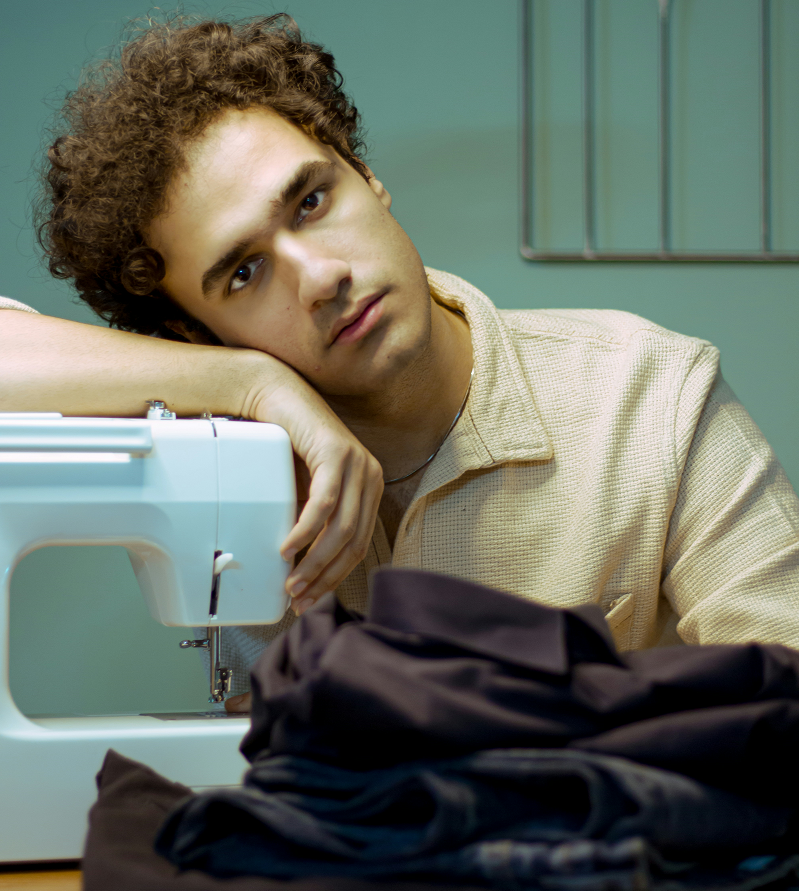
In an age of quick fixes and instant gratification, sewing offers something increasingly rare: a slow, deliberate, hands-on process that rewards patience.
But beyond the joy of creating something beautiful or useful, a growing body of research suggests that sewing genuinely benefits the brain, mental health and physical dexterity in measurable ways.
As someone who has been sewing for forty years (has it really been that long?!), I can vouch for the positives and the negatives, like a sore back and, at my age, eye strain. As with most creative pursuits, one often gets ‘into the zone’ and then time falls away. What feels like minutes can actually turn out to be hours of enjoyment. It’s a form of meditation and the benefits aren’t just mental, but you end up with something useful at the end – whether it be a garment for yourself or someone else, or a new set of curtains.
Sewing, especially when using relatively complex patterns, teaches one to think in three dimensions and by the time the stitches are made, the motion has already played out in one’s head. Often in several iterations to find the best construction method and work out the steps to be followed during construction. I’m sure that people who are adept at sewing and patternmaking (something I thoroughly enjoy), will be good at any number of things needing spatial awareness and the ability to work with shapes – like building a house!
Sewing is far more cognitively demanding than it might appear. According to Betsan Corkhill, co-author of research into the practice and founder of Stitchlinks.com, the complex, two-handed, coordinated patterns of movement involved in sewing make the brain work hard. This isn’t simply a figure of speech – engaging your hands in this kind of intricate, coordinated task activates multiple brain regions simultaneously, involving planning, attention to detail and spatial reasoning all at once. Handwoven By Leah
This matters more than most people realise, particularly as we age. Research indicates that crafting activities like sewing help preserve cognitive function by building what’s known as “cognitive reserve” – additional neural resources that can compensate for age-related changes. Put simply, the more you challenge your brain through activities like sewing, the more resilient it becomes. Mimihali
There’s also encouraging evidence around long-term brain health. One source notes that a Mayo Clinic study found engaging in a creative hobby, like sewing, helped reduce the risk of dementia and preserve memory. Given how prevalent cognitive decline has become in ageing populations, that’s a compelling reason to pick up a needle and thread. Mood Sewciety
Perhaps sewing’s most immediate benefit is what it does for our overstretched, overstimulated minds. Health psychologist Dr Sula Windgassen explains that sewing “can help to harness attention to the present in a way that feels comfortable and pleasant,” adding that repeating this experience can make it easier to stay present in other areas of life too.
This ties into something neuroscientists call the default mode network. Dr Windgassen notes that hands-on hobbies like sewing allow you to activate the brain’s “default mode network,” which helps regulate emotions and has a protective effect on mental health. In other words, the quiet, repetitive rhythm of stitching gives your mind room to settle rather than spiral.
There’s a neurochemical reward too. Multiple sources point to sewing’s link with dopamine release – the neurotransmitter associated with pleasure and motivation – which helps explain why so many sewers describe the activity as genuinely mood-boosting rather than merely relaxing. One hand-sewing focused piece adds that a formal study found participants reported reduced anxiety and stress, improved mood, and enhanced quality of life after engaging in the practice, with benefits reported across all age groups, including children. thread-werk
The fine motor skill demands of sewing bring real, practical benefits to everyday life. Threading needles, aligning fabric and stitching with precision all require exact coordination between hand and eye, and this is particularly important as we age, helping to maintain fine motor skills and dexterity – benefits that can translate to better performance in other precision activities, such as playing musical instruments or sports. Handwoven By Leah
It’s not just about coordination either. Regularly working with your hands on detailed tasks has been shown to improve finger dexterity and can even make joints feel less stiff, resulting in less pain over time – a meaningful benefit for anyone managing the natural wear of ageing hands. Fabricnstitch
What’s striking about sewing’s benefits is how they compound on one another: a sharper, more resilient brain; a calmer, more present mind; and hands that stay capable and pain-free for longer. Add to this the simple satisfaction of creating something tangible in a world of endless digital scrolling, and it’s little wonder sewing is experiencing such a resurgence.
Though I personally do much of my sewing using machines, I’d like to get more into slow stitching by hand with just a needle and thread. I’d also like to delve deeper into embroidery. Yes, sewing is my business, but it is also my hobby and has been an activity I’ve practiced since my school days and through several jobs and career trajectories. It has been a constant thread throughout my life.
Whether you’re threading a needle for the first time or you’ve been at the sewing machine for decades, the evidence is clear: this isn’t just a pleasant pastime. It’s genuine, holistic self-care – one stitch at a time.


