
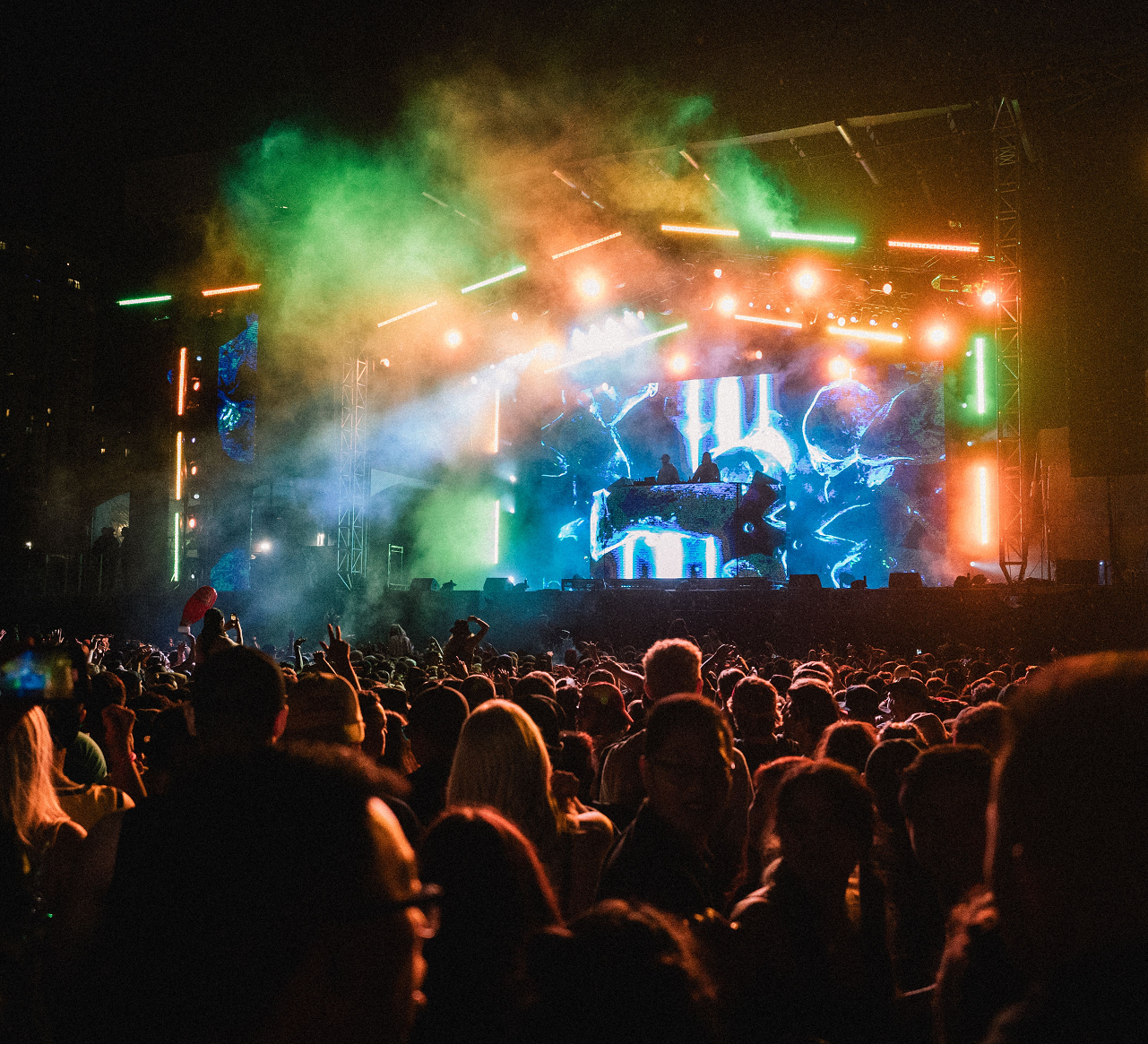
For decades, raving has been written off as pure hedonism – a night of loud music and letting loose. But a growing body of neuroscience and psychology research suggests something more interesting is going on beneath the surface.
Sustained, rhythmic dancing in a crowd appears to trigger measurable neurological and physiological changes, some of which overlap intriguingly with therapeutic techniques used in trauma treatment.
I recall fondly my rave days – the outfits, the excitement building up to a Mother Rave and the Big Night. My group of friends and I made an entire weekend of it, with brunches and afterparties around the pool. I was quite timid and shy, but raving brought me out of my shell, and I’ll be forever grateful to those days. True, drugs were around, but I’m not going to go into that here, but rather focus on the science and the data of raving (and clubbing) and how profoundly it affects the body and psyche.
At a basic level, raving activates a cascade of neurochemicals associated with pleasure, bonding and stress relief. Dancing and social contact are understood to release serotonin, which lifts mood and promotes a sense of calm, while the physical intensity of movement – loud bass, fast tempo – is associated with endorphin release, the body’s natural pain-relief system. Group closeness and physical contact, meanwhile, are linked to oxytocin, often dubbed the “trust hormone” for its role in social bonding.
Flow-state research adds further chemical detail to this picture. Peak-performance researchers such as Steven Kotler have tracked a broader neurochemical mix during immersive flow states, including dopamine (which sharpens focus and reward), norepinephrine (which heightens energy and attention), and anandamide, a compound linked to elevated mood and more fluid, creative thinking.
Central to the rave experience is what psychologists call a flow state – a concept first defined by psychologist Mihaly Csikszentmihalyi as complete immersion in an activity, achieved when the challenge of a task closely matches one’s skill level. Neuroscientist Arne Dietrich has proposed a specific mechanism for this: transient hypofrontality, or the temporary reduction in activity in the brain’s prefrontal cortex – the region responsible for self-monitoring, planning and self-criticism.
When this region quietens, several things reportedly follow. The internal “inner critic” fades, self-consciousness drops, and because the prefrontal cortex also plays a role in tracking time, perception of duration can become distorted – hours passing as if they were minutes. Some researchers connect this state to a reduction in activity in the brain’s default mode network, the system associated with mind-wandering and rumination, which may explain why immersive dancing can feel like such an effective escape from repetitive, anxious thinking.
Beyond individual brain chemistry, there’s a social-physiological dimension too. Research into interpersonal physiological synchrony – including studies published in journals such as Frontiers – has examined how shared musical experiences can align listeners’ heart rates and attentional states, a phenomenon associated with stronger group cohesion and prosocial behaviour. In a crowd setting, this shared bodily rhythm is thought to reinforce feelings of safety, trust and belonging – sociologists have long described this kind of collective absorption as “collective effervescence,” the sense of being swept up into something larger than oneself.
Where this research becomes more speculative is in its application to trauma recovery. Some commentators have drawn parallels between rhythmic, bilateral movement on the dance floor and formal trauma therapies such as EMDR (Eye Movement Desensitization and Reprocessing), which uses alternating left-right stimulation to help process traumatic memories. The reasoning is that repetitive, rhythmic movement combined with a felt sense of safety might, in principle, help calm an overactive threat-response system.
There is a kernel of legitimate science underpinning this idea. Clinicians and researchers such as Bessel van der Kolk and Judith Herman have long argued that trauma is stored somatically – in the body’s nervous system – not just as memory, and that body-based, rhythmic interventions (including dance/movement therapy) can play a meaningful role in recovery. Psychology Today and other reputable outlets have reported on legitimate research into dance therapy’s mental health benefits more broadly.
That said, it’s worth treating the leap from “raving shares some mechanisms with trauma therapy” to “raving is trauma therapy” with healthy scepticism. Much of the more enthusiastic commentary connecting raving directly to trauma healing originates from social media posts, wellness blogs and first-person accounts rather than peer-reviewed clinical trials, and the comparison to EMDR in particular is more a plausible hypothesis than an established equivalence. Professionally administered trauma therapies involve careful, structured processing under clinical guidance – something an unstructured night out, however cathartic, cannot fully replicate.
The genuine research here – on flow states, neurochemical release, and physiological synchrony in social settings – offers a compelling, evidence-backed explanation for why raving can feel so restorative and connective. It’s a legitimate example of how music, movement and community intersect with real neurobiology. But the extension into formal trauma treatment remains an emerging and largely informal idea rather than a clinically validated one. For anyone processing genuine trauma, the dance floor might offer real, valuable relief and connection – but it’s best understood as a complement to professional support, not a replacement for it.
Now, as a middle-aged man, I’d love a rave catering to over forties. We might be older rave bunnies, but the desire is very much still alive and waiting to bust some moves!
Sources referenced: Frontiers (research on interpersonal heart-rate synchrony and prosocial behaviour); Psychology Today (“The Mental Health Benefits of Dance”); work by psychologist Mihaly Csikszentmihalyi on flow theory; neuroscientist Arne Dietrich on transient hypofrontality; Steven Kotler on flow-state neurochemistry; Bessel van der Kolk and Judith Herman on the somatic nature of trauma.
This article is for general informational purposes and is not a substitute for professional medical or psychological advice.


