
My excitement about decorating my charming new office, with its direct view of the central park, different species of buck and an abundance of vegetation, was off the charts. I had no clue how to keep my boisterous delight at bay. Doubts about the challenges of my new job were instantly expelled from my mind. What a special moment to celebrate!
My life had been a rollercoaster since my backpacking trip through Europe. Falling in love, being nabbed by the army, taking the train to Hell, surviving basic training, escaping to jail and suddenly finding myself in a fancy office was positively cinematic!
Captain Pieterse sorted out my salary and updated my paperwork. My rollercoaster ride became a limousine ride. The cherry on top was my latest pay cheque, boosted by back pay and overtime. Having lived like a gypsy, I’d acquired very little and coped perfectly well without it.
I had no idea what to do with the extra money. We practically lived for free, and the single quarters’ mess had a marvellous chef. Captain Pieterse suggested I fly home and drive back to Durban with the things I needed.
“Captain Pieterse, my old Ford panel van overheats. I’ll never make it here,” I said.
He laughed. “Buy a new car with your fat bonus!” I’d lost touch with the value of money after learning to live without it.
“Surely you must have thought about a car?” he asked. I could hardly tell him that I’d only been thinking about phoning Dolph. “Captain, I think I’d love a red car!”
He smiled when I admitted I had no clue what kind I wanted. I’d need a dealer willing to trade in my old, dented Ford panel van. “Please take ten days off to sort your life out and come back with your red car!” “Thank you, Captain Pieterse. I’d love to see my mum and drive back in my new car.”
“I’m sure your mother would love to see you. Remember to bring back some clothing and a few things you care about,” he said.
Peter Schnetler and I had become friends soon after he arrived at Durban Westville Prison’s personnel office. He insisted on taking me to the airport.
The ground staff eyed me suspiciously when they saw I had no luggage. I explained that I was going home to fetch it after coming out of the army. People seemed to have little sense of humour, so I kept quiet about escaping the army and going home from Westville Prison. I still looked like a convict and felt like an escapee.
Freedom felt awkward. Being locked up every day had left its mark, and I hadn’t snapped out of my total self-control mode. I trained alone in my room daily, followed by my three showers. I’d remained completely sober since arriving.
Perhaps I needed to get drunk and let my hair down!
My short flight to Port Elizabeth was quick, and I searched for my mother. She hardly recognised me. When she burst into tears, I felt terrible. She was overjoyed to see me after I’d vanished off the radar and barely spoken to her for four months.
Phoenix, my giant Rottweiler, leapt about like a massive puppy, making the strangest sounds as though trying to speak. He nearly knocked me over when he jumped up against me. We wrestled playfully as we had when he was young, except that now I was being kissed the slobbering Rottweiler way!
Overcome with emotion, I shed a quiet tear. The army had hardened my shell so much that I’d forgotten I had a marshmallow heart.
My mother cooked all my favourite dishes and, for once, didn’t mind me sharing my food with Phoenix. He loved anything that came off my plate. In his eyes, I was a gourmand whose judgement he trusted unconditionally, as most dogs do!
That night, I sneaked him into my bed to cuddle him as I had when he was a puppy. I dreamt about my new red car and Phoenix as the cutest six-week-old puppy.
On the flight home, I’d decided to walk from dealer to dealer. They were clustered close together in North End.
The General Motors dealership had my dream car: a red Opel Kadett GLS 1.6-litre hatchback, winner of the 1985 European Car of the Year competition.
My salesman was a gorgeous young guy who bent over backwards to secure an incredibly good trade-in price for my badly painted A-Team panel van. I was over the moon and tempted to ask whether he came with the deal!
It was another movie-worthy moment when he ceremoniously handed me the keys to my first new car. Thanks to the trade-in and my new graduate salary, I could comfortably afford it. He failed to persuade me to buy the super-fast Boss, with its two-litre engine.
After driving awful cars all my life, Venus felt like a spaceship. What an incredible feeling to turn the key without wondering whether the engine was in the mood to respond!
I named my Opel Venus, after the goddess of love. The name expressed the love and compassion I’d kept bottled up inside me.
My mother was immensely proud of me and the sacrifices she’d made to educate her children despite living in poverty. I became teary when I thanked her. She reminded me that I’d been the only child who consistently tried to help her financially since I was twelve. My eldest sister, Denise, helped Mum as much as she could once she started working as a teacher.
I’d financed myself through university, which made Mum very proud. Neither of us was good at expressing emotions, even in such an incredibly special moment.
It was incredible to see my Honda and Yamaha waiting faithfully for me. Both were covered in dust but started immediately. I wanted to feel the wind on my face, so I rode without a helmet, enjoying the freedom of my short brush cut. Wind feels better blowing through your hair than over it!
Riding a bike was far more fun than driving a car. Transport costs settled the question of which bike to send to Durban by train. I chose the lighter Yamaha DT125 for Westville Prison. It would become my main transport around the enormous grounds, which stretched for several kilometres. I needed to move between sections constantly, and the bike was cooler than a car.
I wanted to show off Venus to friends I’d missed so much, starting with Stuart Gatley.
“I don’t believe it, Rubin!” he exclaimed.
I gave him a long hug and told him I’d missed his bitching. He thought that was hilarious and declared that we needed Harvey Wallbangers on the double. He’d saved the tequila for this occasion so we could make the real thing. He had a heavy hand!
I wasn’t used to alcohol anymore, but the tequila hit the spot, and euphoria kicked in almost instantly. I was experiencing one of the happiest moments of my life, even if I had to return to Westville Prison afterwards.
My cottage looked empty without my few belongings. Stuart confessed that he’d felt too emotional to rent it out. Deep down, he’d hoped I’d return. His life no longer felt the same without me there to irritate him!
Tequila made me talkative.
“Stuart, I wonder whether Dolph and I would still be compatible after everything that’s happened to me?”
“The army changed me more than I thought. We may no longer share as much as we did before,” I confessed. “I hardly phoned anybody, and now I feel awful about it.”
“Rubin, you had a tremendous shock when the army nabbed you, with so little time to prepare psychologically. It shocked all of us, too, and I still haven’t adjusted to your sudden departure. I took you for granted and felt possessive about you in a motherly way,” Stuart said.
“Now you look so butch and grown up, and I love your minimal hair. You’re looking fabulous, and I can’t help feeling jealous of your new friends in Durban!”
“Will you join me for a bite, Rubin?”
“I’d love to eat something you’ve made, just as we used to, when you’d impulsively throw something together while ordering me around like a sergeant-major!” I said, pulling his leg.
His parents were overwhelmed to see me, which made me sad. They were both in their eighties, and at that age, you take nothing for granted. People die or move away, and you may never see them again.
I promised them I’d be safe and wouldn’t be blown up in the Border War. My desk job involved no operational risks, and I’d return to see them often.
After dinner, I had to say goodbye. They loved my shiny new car, which didn’t backfire!
Back home, my mother was relieved to see me, and Phoenix gave me another enormous welcome. He grabbed my hand and pulled me towards the pool so I could swim and splash him with water, which he loved. It was cold, but I wanted to make him happy by playing his little pool games.
Shame, he was lonely and ideally needed another dog for company—or me.
My mother worked at Cape Recife High School and often stayed overnight, leaving Phoenix alone. I felt guilty again. Somehow, I still felt responsible for everyone and everything I had to leave behind.
This time, I had time to mourn, even while staring at my shiny red Venus, which still felt alien. I missed the beautiful memories I’d shared with A-Team, my red, black and silver, dented Ford panel van. At least I didn’t have to part with my bikes, which knew all my sensual secrets.
Dolph was disappointed when I told him my leave was too short to visit him for a few days. I explained that I had to undergo Prisons Services training in Kroonstad, close to Bothaville and the farm. Perhaps I’d have time to visit now and then. He was pleased, but his exuberant joy made me feel guiltier about how the army had messed me up, even though I denied it had.
For the first time, I realised how deeply I’d entered the lion’s cage and the psychological gladiatorial arena in which a significant part of South Africa’s story was unfolding around me.
As cannon fodder, I could have been killed by a landmine or shot by enemy soldiers. As a paratrooper, I might have descended behind enemy lines under cover of darkness, operating alone or joining the nearest unit. My life could have taken a very different turn.
There was another possibility. As a member of the End Conscription Campaign (ECC), I could have faced a six-year jail sentence for failing to report for military service. Conscripts whose political affiliations challenged the status quo could face harsher treatment.
Reporting for duty did not mean accepting the system or supporting its politics, but it could change how your actions were interpreted. Those who reported could be treated differently from those who refused outright. At our age, opposition was sometimes dismissed as the product of indoctrination by supposedly evil forces. Counter-indoctrination and shorter sentences could follow, depending on the circumstances.
I had reported for duty, yet I hardly fitted the expected mould. Now, working within the prison system, I was discovering how complicated the boundaries between obedience, dissent and institutional control could be. I’d been given scope to prove myself, although I had no idea how far that trust extended.
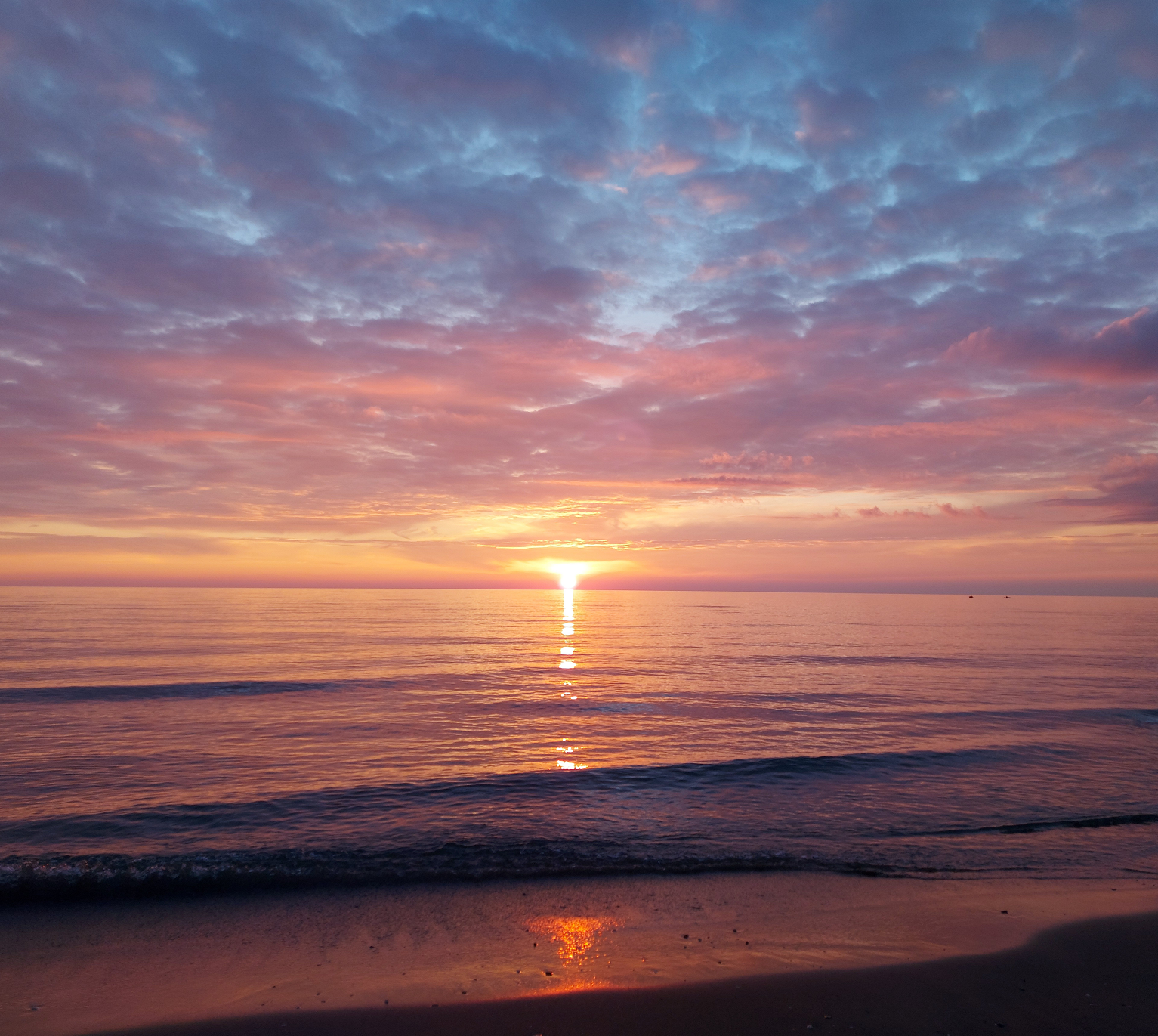
These thoughts weighed heavily on my conscience. One early morning, I sought solace by battling the big waves on my paddle ski. The fresh saltwater spray eased my emotional burdens, as it always did at sunrise.
Another magnificent dawn, another new day, no matter how foul the weather. Dawn always brought hope. A pod of dolphins appeared, almost as if they sensed my loss and lack of direction.
They came within touching distance, as though inviting me to join them. They were probably my regular pod, familiar with me and accustomed to my presence. For a moment, I felt less alone.
I was tempted to abandon my rescue craft and swim with them, but for my own safety I couldn’t leave it for more than thirty seconds. Their presence connected me to something beyond my immediate troubles. The sunrise reminded me of the cycle of life and the small roles we all play in it.
The day before, I’d taken my bike to the train station to have it loaded for the return journey to Westville Prison. Early the next morning, I climbed into Venus to return to Mars, where many battles with the establishment awaited me.
My armour was youthful innocence and compassion. Even deadly soldiers could recognise the tiniest remnants of those qualities within themselves.
Venus drove like a dream, and we arrived at Westville before long. I was so lost in thoughts of my last hours of freedom that I barely noticed the journey.
My fancy office was merely a gilded cage, and I felt like a guinea pig. I’d been given responsibility for new areas of administration, but I still had supervisors to report to. Captain Pieterse was one of the few who gave me remarkable freedom, starting with permission to interview prisoners diagnosed as psychopaths or sociopaths.
The work was fascinating. Such prisoners could be remarkably skilled at manipulation, appealing to your compassion while presenting themselves as victims of the circumstances that had landed them in prison. Many portrayed themselves as pawns of societal injustice, and they could be extremely convincing.
I often doubted whether my evaluations were correct. Voicing those doubts had an unexpected benefit: my bosses liked to be consulted. My confidence had lost traction during army basic training, and questioning my own judgement also gave the watchful eyes around me an opportunity to assess whether I could be trusted.
Working with different categories of prisoners was educational. My first exposure to political prisoners came soon after I began representing Captain Pieterse on the Parole Board. I had responsibilities and a measure of freedom, but I was still discovering how little power those things necessarily conferred.
The Security Police operated in a climate of suspicion, trusting few people, including their own colleagues. It was a dog-eat-dog environment in which nobody could be entirely certain whom they could trust.
We had to work with them, yet there was no trust. They shared nothing with us, and we tried to share nothing with them. Their offices were in the adjoining building, and they came to us daily because political detainees were held in Medium B, close to my office. I had no insight into what they knew, suspected or imagined. Their animosity towards me was apparent, but I could never be certain what lay behind their suspicions.
None of us was free from scrutiny. As I got to know Captain Pieterse, the Education Department’s supervisors, the predominantly black welfare officers and Colonel Williams, the prison head, I began to appreciate the pressures they faced.
Brigadier Kapp occupied a particularly mysterious position. He seemed to operate beyond the confines of the Security Police, who appeared cautious around him. We could only speculate, which was no substitute for certainty.
Given my own skeletons and my liaison with lecturers and political detainees, I had reason to be careful. During the State of Emergency, the uncertainty itself was intimidating. We could not know what the Security Police might infer from our activities or how far their suspicions extended.
Prisoners booked appointments with me back-to-back every day. Decisions about their futures were made by somebody else. I was learning what it meant to be a poster boy, with my youthful innocence and empathy, in a system where responsibility did not necessarily come with power.
This is a brief excerpt from Rubin van Niekerk’s upcoming Memoir/Autobiography, titled Mentors, Family and Friends Matter, chronicling the people, places and experiences that shaped his life from early childhood to later adulthood. We all relate to this universal experience.
New chapters will be published regularly in the Magazine section of the landing page of Gay Pages website, alongside our favourite archived articles, as the journey unfolds.


