
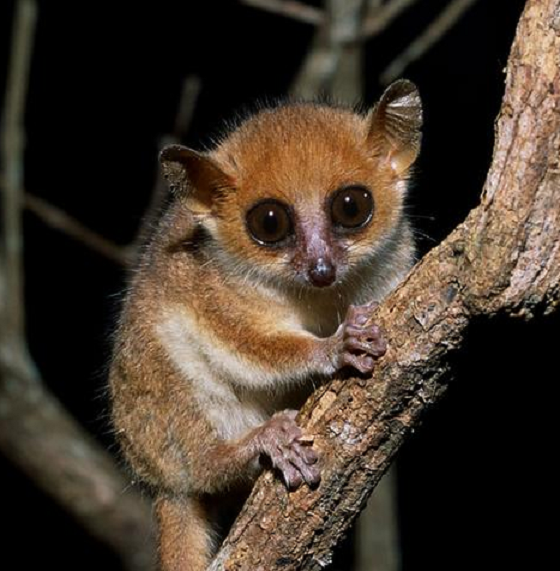
Image: Berthe’s Mouse Lemur (Microcebus berthae), the smallest living primate, was described by DPZ scientists in 1993.
Our brains grew as our thumbs stretched. That is the striking conclusion of a new study in Communications Biology, which finds that primates with longer thumbs also tend to have larger brains. Using data from 95 living and fossil species, researchers at Durham University and the University of Reading report that the link holds across the primate tree, not just in humans or tool-users. The work points to dexterous hands and expanding neocortex evolving together, shaping the roots of technology, culture, and survival.
Thumbs, Brains, And Evolution
Long thumbs are key to precision grasping, the movement that lets humans hold a pen or thread a needle. Fossils show most hominins had unusually long thumbs. Yet the new analysis reveals that this trait fits within a broader primate-wide pattern: relative thumb length scales with brain size across lemurs, monkeys, apes, and even tarsiers. That means the human hand, extraordinary though it is, is part of a continuum rather than a radical departure.
“We reveal a significant relationship between relatively longer thumbs and larger brains across 95 fossil and extant primates,” the authors write in the paper.
Using Bayesian phylogenetic models, the team found the correlation robust to different statistical assumptions and not driven solely by hominins. Even when species like Australopithecus were excluded, thumb length still tracked with brain volume. The outlier was Australopithecus sediba, whose thumb was exceptionally long for its modest brain size.


